Paje is not a resort — it's a village. While you're sleeping, 200 women are working the lagoon. While you're having dinner, a Swahili wedding is starting up with drums. If you come to Paje only to breakfast and dine within the hotel walls, you miss 80% of the place. This is what happens when you step outside.
5:30 — The seaweed farmers enter the lagoon
The first sound of Paje is not the sea — it's the hoe. At low tide, which shifts every day, the village women walk out into the exposed lagoon. They drive in stakes and braid seaweed (Eucheuma) along 30-metre lines. This is Paje's main non-tourism economy. The dried seaweed is exported to the Philippines, where it is processed into carrageenan — a thickening agent used in cosmetics and food.
It's an unusual sight, almost prehistoric — silhouettes in colourful wraps moving across the wet sand as the sun rises red behind the horizon. If you wake at that hour and head down to the beach, you greet them with a "mambo" (how's it going?) and usually get back a "poa" (brilliant) without anyone breaking their working rhythm.
7:00 — Fish market
Dhows (traditional sailing boats) pull up to shore with the night's catch. Tuna, grouper, squid, lobster if they've been lucky. Cooks and locals negotiate entirely in Swahili — the price shifts with the tide, the day of the week, and the look on your face when you see the first tuna.
If you join the hotel chef first thing in the morning (we invite you to — Fridays and Saturdays), you learn to buy by reading eyes and gills, and you return to the hotel with the day's dinner — which goes straight into the wood-fired oven.
9:00 — Kite, yoga, or work
The wind picks up. Young people grab kites. Others settle on the terrace with a laptop. There are a couple of cafés with decent WiFi 200 metres from the hotel — locals call them "Mama Rose's" and "the Frenchman's", and they serve as the office for Paje's digital nomads. You order a mandazi (a kind of doughnut) and a decent espresso, open Notion, and work for three hours looking out over the lagoon.
13:00 — Lunch at a beach shack
Paje has 6–8 proper beach spots — Mr. Kahawa, Loop Beach Bar, Cuba Libre, Up Coast — where a whole grilled fish with pilau rice and mango salad runs about 15–20 USD. You eat with your feet in the sand, watch someone practising their kite, and by half two you're back at the hotel for a short nap. There's no shame in napping in Paje: the siesta is part of the ritual.
16:30 — The horses cross the beach
The village equestrian club brings the horses down to the beach every afternoon at half four. If you live in Paje long enough, you know them all by name — the regular client, the new horse, the guide who always rides last. Guests who happen upon the moment get the photo of the year. Those who book a gallop ride from the hotel join them as they cross.
19:00 — Sunset from the coral wall
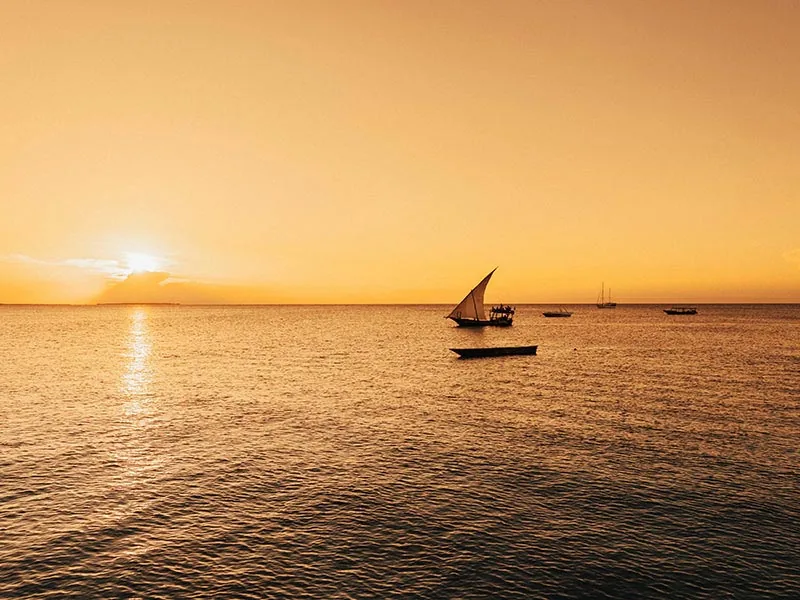
Sunset in Paje is not Mykonos. It's understated — the sun drops behind the main island, so you see a pink-orange sky over the palms rather than the classic red disc falling into the sea. If you want the classic shot, board a dhow at 17:30, sail 20 minutes west, and catch it from the open side. Cold Tusker beer on board is included.
21:00 — Dinner by candlelight or lukmania
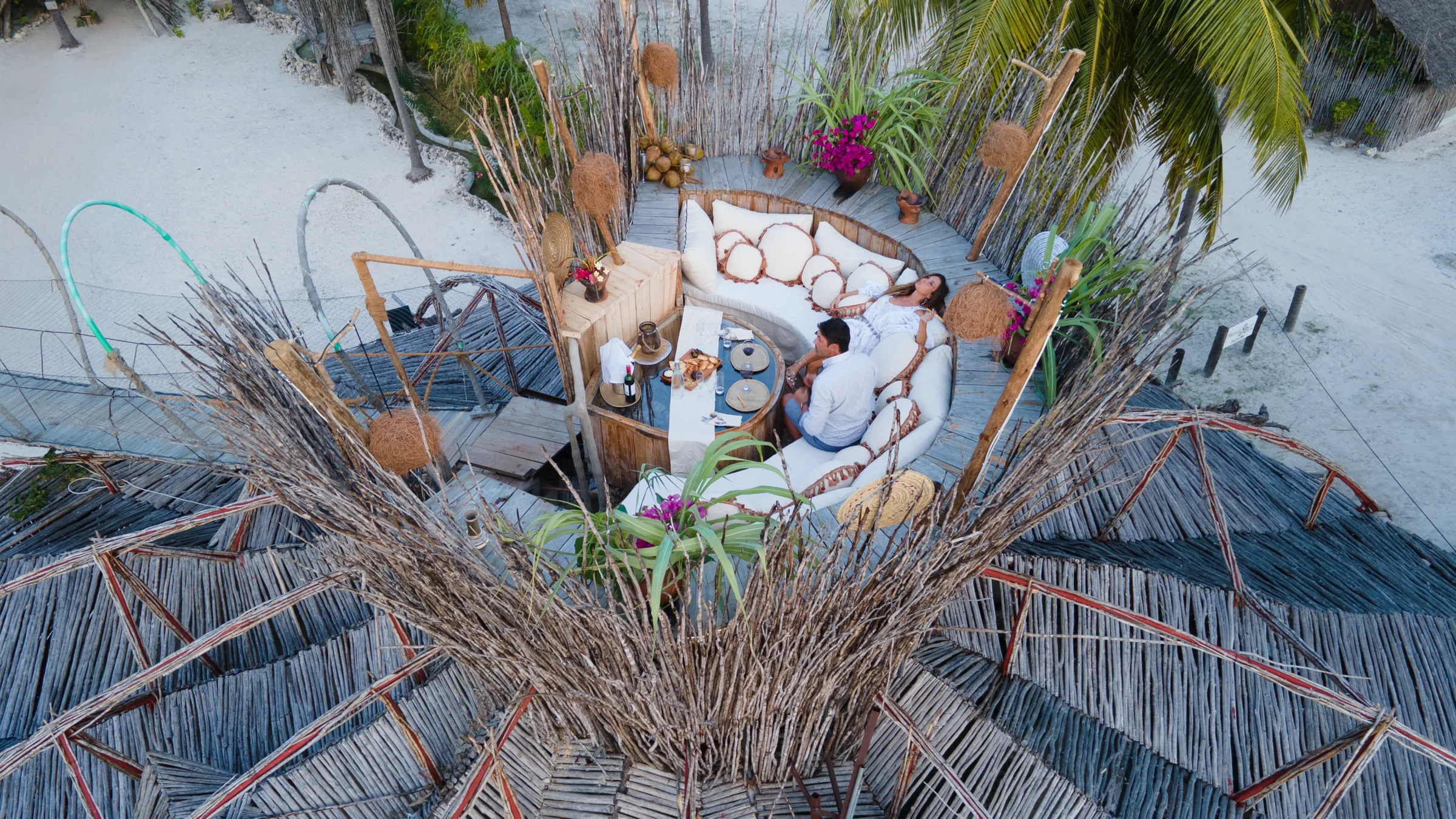
Dinner at the hotel: grilled fish with grated coconut, pilau rice with cardamom and cinnamon, green papaya salad, South African wine. Long table if there's a group, private table if you've booked VIP Nest.
Dinner in the village: "lukmania" is not a place — it's the Swahili word for "a generous offering". Locals use it for the spontaneous courtyard dinners that some families host for guests who have stayed more than a week. We don't post about them online. You get an invitation if you've treated the village well.
23:00 — Music or silence
Some of the beach spots have live music two nights a week — acoustic guitar, ngoma (drum), sometimes a jazz fusion set. Other nights the village goes quiet and you hear the crickets. Paje is not a hard-party destination. The party is nature in motion — the tide coming in, the wind shifting, the sun going down. You go to bed early because tomorrow the seaweed farmers are heading back out.
Our advice: Book a minimum of 5 nights. Three days isn't enough to find the village's rhythm. Five gives you one morning with the seaweed farmers, one at Mnemba, two for kite or horse riding, one day in Stone Town, and two good evenings out. Seven to ten days is the full plan. View accommodation types →